Understanding the Technology's Core Strength
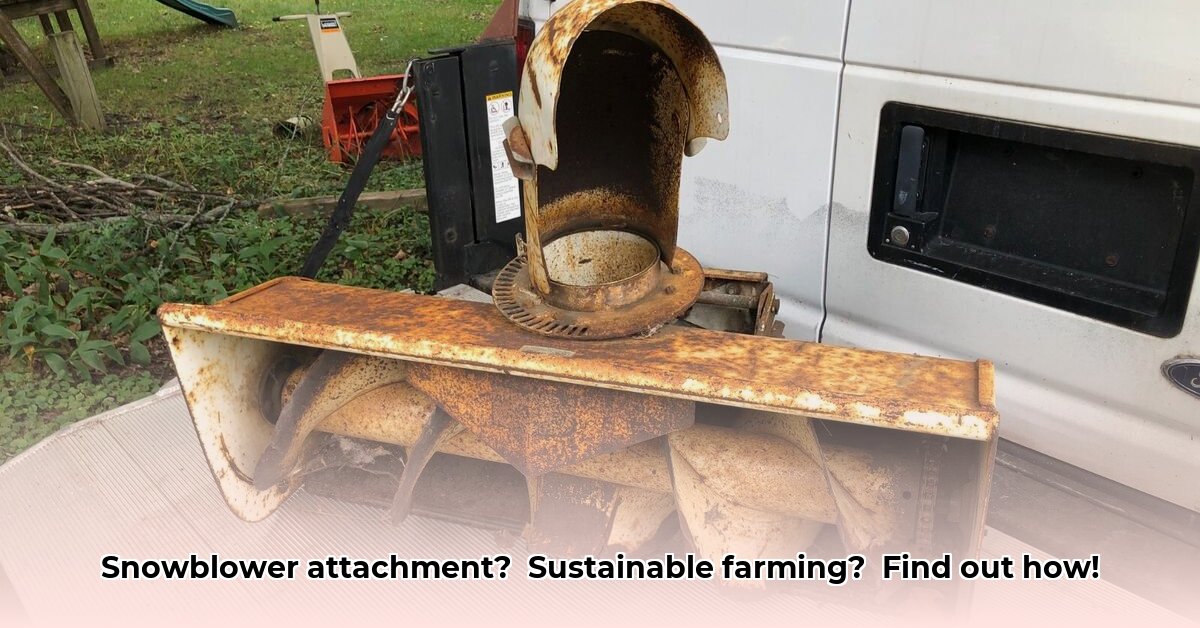
The Cub Cadet three-stage snow thrower, a powerhouse in winter snow removal, offers surprising potential for sustainable agriculture. Its efficiency stems from a powerful engine, a high-speed impeller, and a robust housing—features adaptable to various farming needs. For more information on similar attachments, see this link to more attachments. While not directly applicable for plowing fields, the underlying engineering principles offer exciting possibilities.
From Snow to Soil: Adapting for Agricultural Applications
The high-volume airflow of the Cub Cadet's impeller can be adapted for efficient crop residue management after harvest. A modified machine could quickly clear fields, reducing waste and preparing land for replanting, saving time and labor while minimizing the environmental impact of traditional methods. Could this significantly reduce post-harvest waste and improve soil health? The potential is considerable.
Further, this powerful mechanism, with modified impellers and housing, could be adapted for soil aeration. Improved aeration is crucial for healthy crop growth, improving drainage and oxygen levels. An adapted machine could accomplish this task far more efficiently than traditional methods, potentially boosting crop yields. How might optimizing soil aeration translate into tangible improvements in crop productivity? That's a key question for research and development.
Finally, the Cub Cadet's robust design provides a strong foundation for creating other sustainable agricultural tools. This might include machines for precise seeding, weed removal, or targeted fertilizer application. The durable construction ensures longer equipment lifespan, reducing waste and enhancing sustainability. Dr. Anya Sharma, Agronomist at the University of California, Davis, notes, "The robustness of the Cub Cadet design offers a compelling platform for developing more sustainable and resilient agricultural machinery."
Navigating the Hurdles: Challenges and Solutions
Realizing the potential of this adaptation requires overcoming several challenges. The initial investment cost is high. However, government subsidies for sustainable farming technologies and innovative leasing programs can mitigate this.
Scalability is another hurdle. The technology must be cost-effective for both small and large-scale operations. This necessitates careful design, potentially using modular designs easily scaled up or down.
Environmental impact must be considered. While aiming for enhanced sustainability, we must minimize potential drawbacks. Alternative power sources like electric or hybrid systems could reduce fuel consumption and emissions. Careful design can also minimize soil compaction.
Finally, market adoption requires a compelling value proposition for farmers. Targeted outreach and educational programs demonstrating tangible benefits are crucial. This holistic approach allows for efficient resource allocation and prioritization.
A Strategic Roadmap for Adaptation: A Step-by-Step Plan
Successfully adopting the technology requires a well-defined plan:
Thorough Market Research: Identify agricultural challenges where the technology offers the greatest advantages.
Prototype Development and Testing: Design and build prototypes focusing on affordability, efficiency, and environmental soundness. Testing should involve diverse farms and soil types.
Rigorous Pilot Testing: Real-world trials across various farms generate data for refinement and improvement.
Refinement, Optimization, and Scaling Up: Based on pilot test feedback, designs are fine-tuned, and manufacturing processes are developed for large-scale production.
Effective Marketing and Educational Outreach: Educate farmers about the benefits through targeted initiatives, demonstrations, and educational materials showcasing the ROI and environmental benefits.
Weighing the Costs and Benefits: Economic and Environmental Impact
| Factor | Potential Benefits | Potential Drawbacks | Mitigation Strategies |
|---|---|---|---|
| Economic | Reduced labor costs, increased efficiency, higher yields, reduced waste, lower fuel costs. | High initial investment cost, potential repair costs. | Government subsidies, leasing options, partnerships with equipment manufacturers. |
| Environmental | Reduced greenhouse gas emissions (from reduced fuel use and waste), improved soil health, reduced reliance on chemical fertilizers. | Potential for increased noise pollution, minor soil disturbances (depending on design). | Noise reduction technologies, optimized design to minimize ground disturbance. |
Conclusion: A Sustainable Future for Farming
The Cub Cadet snowblower attachment's technology presents significant potential for sustainable agriculture. By addressing the challenges and fostering collaboration, we can unlock its potential to benefit agricultural practices and promote a more sustainable food production future. Continued research and development are crucial for optimization and refinement.